Little Minegishi
Bullet TrainLittle Minegishi, the only son of Yoshio Minegishi, is a young adult whose rescue is followed within hours by his death aboard a Shinkansen. His brief presence changes the job Tangerine and Lemon have been hired to do: they bring him out of captivity, but cannot protect him on the train or explain what happened. The contrast between his apparent return to normal and the stillness in his seat makes his death both a personal tragedy and the crisis that drives the men’s search for a killer and a missing suitcase.
Identity and Rescue
Little Minegishi is described as a long-haired man in his early twenties, though the adults around him repeatedly call him a kid or rich kid. He is the only son of Yoshio Minegishi, a man feared by the people hired to rescue him. Two days before Tangerine notices him on the train, Little Minegishi was kidnapped and held in a room three floors underground in Fujisawa Kongocho. Tangerine and Lemon broke him out during the night and brought him to the train without giving him time to sleep.
At nine in the morning, Tangerine calculates that nine hours have passed since the rescue. The young man has been through captivity and torture, yet appears much better than he did when the rescuers found him: then he was tied up, badly shaken, and struggling to regain control. Now he seems, at least outwardly, almost back to normal. The account establishes this as an appearance, not a reliable measure of what he has endured. Tangerine instead turns it into a judgment about people who do not read fiction, imagining that they lack empathy and can simply move on from experience. That generalization belongs to Tangerine’s outlook; it does not establish anything about Little Minegishi’s inner life.
The Rescue and Its Uneasy Relationships
Little Minegishi asks whether his father hired Tangerine and Lemon to save him. His earnest question cuts through their banter and confirms that he understands the rescue as something arranged by his family, though he seeks an explanation from the men themselves. Lemon says they took the job partly because refusing Yoshio Minegishi would have been too dangerous; Tangerine agrees that the father is frightening. Their answer presents the rescue as both an act of service and an obligation imposed by the power of the person who commissioned it.
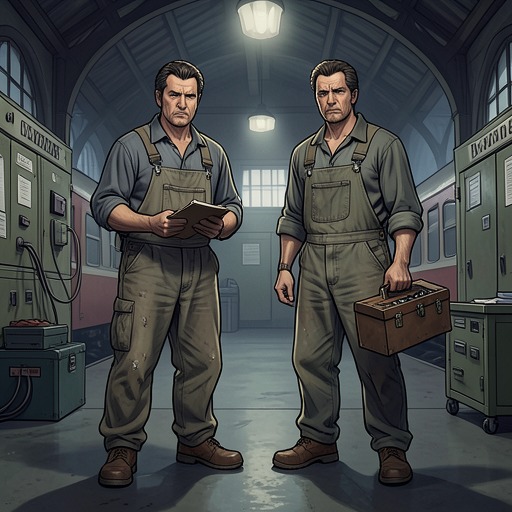
The rescuers’ manner also shapes the narrow view the reader gets of Little Minegishi. Tangerine and Lemon are mistaken for brothers, even twins, and bicker over the comparison while the young man sits between them. Little Minegishi joins this confusion by earnestly addressing them as a pair of fictional twins. The exchange gives him a moment of participation in their comic world, but it does not erase the imbalance between the men who control the situation and the passenger they have just rescued. His question about his father’s role is one of the few direct indications of what he wants to understand.
Death Aboard the Train
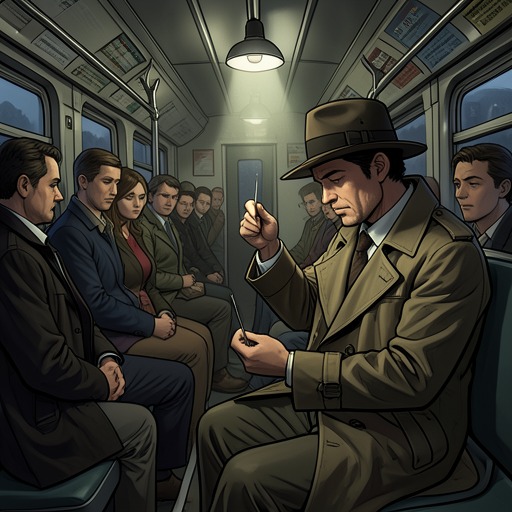
After boarding, Little Minegishi remains in his seat halfway along the carriage, with the seat reclined and his eyes closed. His posture initially resembles sleep. Tangerine, searching the train for a mid-sized black suitcase, sees him and realizes something is wrong; he sits beside the young man and checks his neck. The discovery comes against the known circumstances of the journey: Little Minegishi has gone without sleep after being kidnapped, held, and moved onto the train in the night. But exhaustion does not explain what the men find. He is dead.
Lemon’s reaction is to ask Tangerine what they should do, while Tangerine reproaches him for having left Little Minegishi alone. Lemon explains that he went to check on the suitcase because Tangerine had been pressing him about it. Their argument locates the death within the practical disorder of the job: the men were divided between looking after their passenger and securing the bag, and neither task has been completed. When Lemon later returns from searching for the suitcase empty-handed, he tries to start a conversation about Thomas and Friends rather than address the corpse beside him. Tangerine recognizes that the levity does not change the situation: they have a dead passenger and no answer about what happened.
As the train departs, Lemon lifts Little Minegishi’s hand and waves it toward someone watching from the platform. The gesture draws attention to the body and ends any appearance that the passenger is merely asleep. Tangerine pulls Lemon away and tries to prop Little Minegishi back into place. The scene makes the death visible to an outside observer, while the two rescuers remain trapped with its consequences aboard the moving train.
Consequences and Narrative Role
Lemon responds to the death with a bleakly comic accusation that Little Minegishi should not have died and has left them no clues. The joke expresses the men’s frustration, but it also exposes how completely their attention has shifted toward the unsolved job. They have lost the suitcase as well as their passenger, and, as Lemon frames the problem, they must either find whoever killed Little Minegishi or recover the bag because Yoshio Minegishi is angry with them. The son’s death therefore raises the stakes of the rescue and binds the two failures together without establishing that they share a cause.
Little Minegishi’s death remains unexplained in the evidence presented here. The circumstances support the fact that he is found dead on the train and that Tangerine and Lemon treat the death as a killing to be investigated; they do not identify a killer or establish how he died. His function in the plot is consequently more than that of the rescued passenger: his presence first gives the men a charge to complete, and his death transforms that charge into an urgent search under pressure from his father. The suitcase and the dead young man become two unresolved demands on the same journey, while Little Minegishi himself, after asking only whether his father sent the rescuers, can no longer supply the explanation they need.